
Editor’s update: Frank has since become Chief Technology Officer at Pro Legal Funding, where Todoist remains part of his daily routine.
For twelve years, Frank Bravo began each workday by opening Todoist and reviewing what needed attention. As Chief Technology Officer at Embarcadero Media, he managed technology infrastructure for a nonprofit media company that had served the San Francisco Bay Area for more than three decades.
That straightforward routine followed years of frustration with more complicated project management systems.
A simpler start to the day
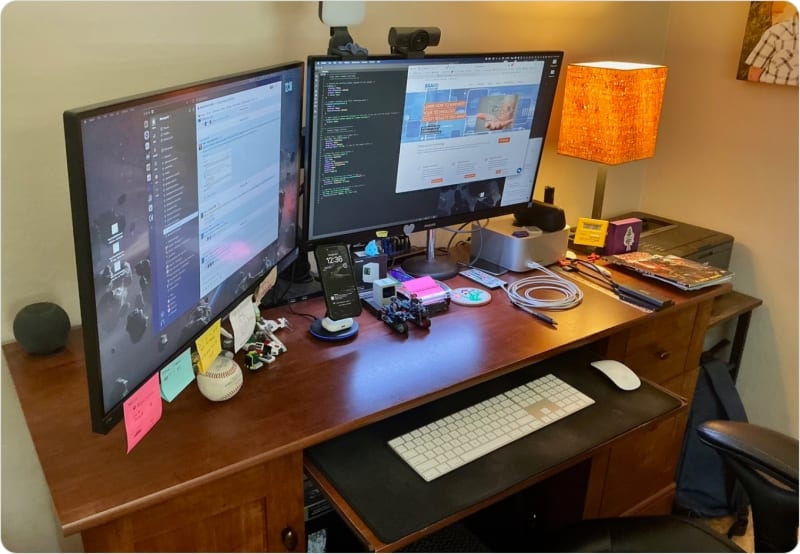
Frank starts work early, before most of his colleagues, by checking the day’s tasks. Previously, using Basecamp alongside a client’s Jira system meant that even a basic reminder could require several logins and duplicate entries. In his account, tracking work was taking time away from completing it.
When tools create more work
During 32 years at the organization, Frank encountered many project management products, each requiring its own training, processes, and approach. His three-person technology team also had client requirements and internally built tools to manage. Eventually, he felt that maintaining those systems had become a bigger burden than the work they supported.
Frank considered Jira and Basecamp particularly demanding, and more broadly believed project management tools could consume too much time in their own administration.
The alternative came from home: his older son, then in high school, discovered Todoist and suggested it might meet his needs. Frank began using it and stayed with it.
Starting alone before bringing in the team
Frank first tried Todoist on his own to see whether a simple task manager could support his CTO responsibilities. He valued being able to use it as an uncomplicated to-do list while still having room to build a fuller workflow.
Within weeks, he had connected his calendars and organized his projects. With too many responsibilities to keep in his head, he made Todoist the place where work had to be recorded to receive attention.
His colleagues were initially reluctant to switch. They had already invested effort in an internal project management tool that met their needs.
Integration made the difference
Rather than asking the team simply to replace its existing system, Frank showed how members could manage individual tasks in their own projects while collaborating in shared ones. Connecting their ticketing system proved decisive.
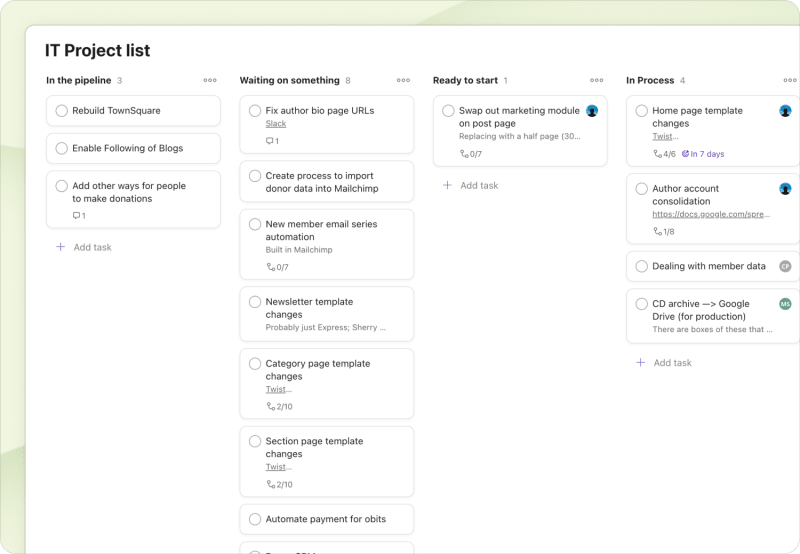
Emails forwarded from that system automatically became Todoist tasks for the assigned team member, removing manual entry and duplicate tracking. Recurring maintenance, personal projects, and customer support requests could then sit together in one system.
Frank also discovered an unexpected advantage: everyone could see what colleagues were working on. That visibility helped team members trust that work was being handled.
A workflow that lasted
Adoption spread beyond the technology team. Frank believed the marketing team also used Todoist extensively, although organizational changes affected its use elsewhere.
Twelve years after his son’s recommendation, Frank and his core team still used it daily. Their ticketing integration handled dozens of requests each week, automatically organizing, assigning, and tracking them without requiring the team to focus on project management methodology.
Matching complexity to the work
With three decades in technology leadership and a consulting business alongside it, Frank recognized that some work requires complexity. Nevertheless, based on his experience with a client using Jira, he felt it presented too much information and was difficult to justify outside a Fortune 100 company.
He described another client that chose Monday because an employee had used it before. They were only creating projects and tasks—not using Gantt charts or resource planning—so he considered it unnecessary overhead for work a simpler tool could handle.
Frank’s advice for smaller teams
Frank’s view was that small and medium-sized businesses often use task management systems more complicated than necessary. He believed a tool such as Todoist could cover 99% of their needs without the administrative burden.
For teams trying Todoist, he offered three recommendations:
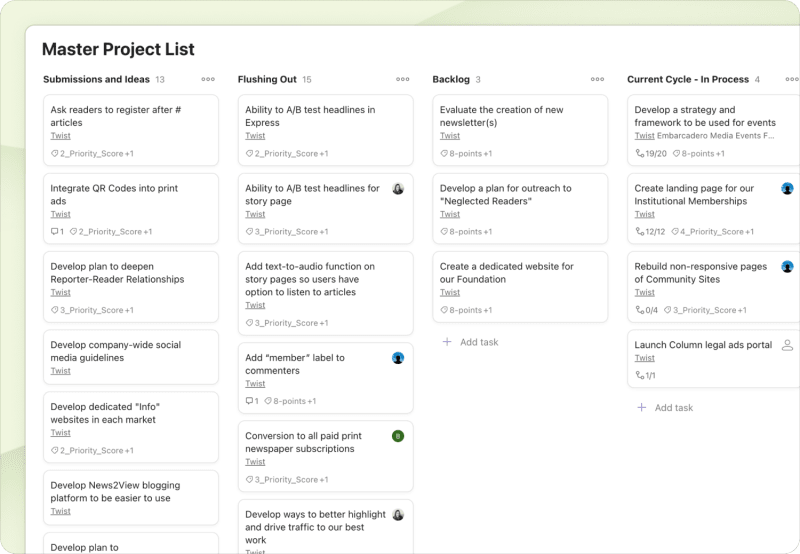
Organize work into projects. Without a clear structure, tasks can become an unsorted collection.
Connect calendars. Integrate both personal and organizational calendars so work can be assigned to days and times.
Apply labels. Use them to categorize work and track status.
One shared view of the day
Instead of signing into several systems and updating the same work in different places, Frank could begin his mornings with a clear task list that his team could also see. His rule remained that work not recorded in Todoist was unlikely to get done.
For him, twelve years of daily use supported a practical preference: choose a system that makes the work visible without making its management a job of its own.