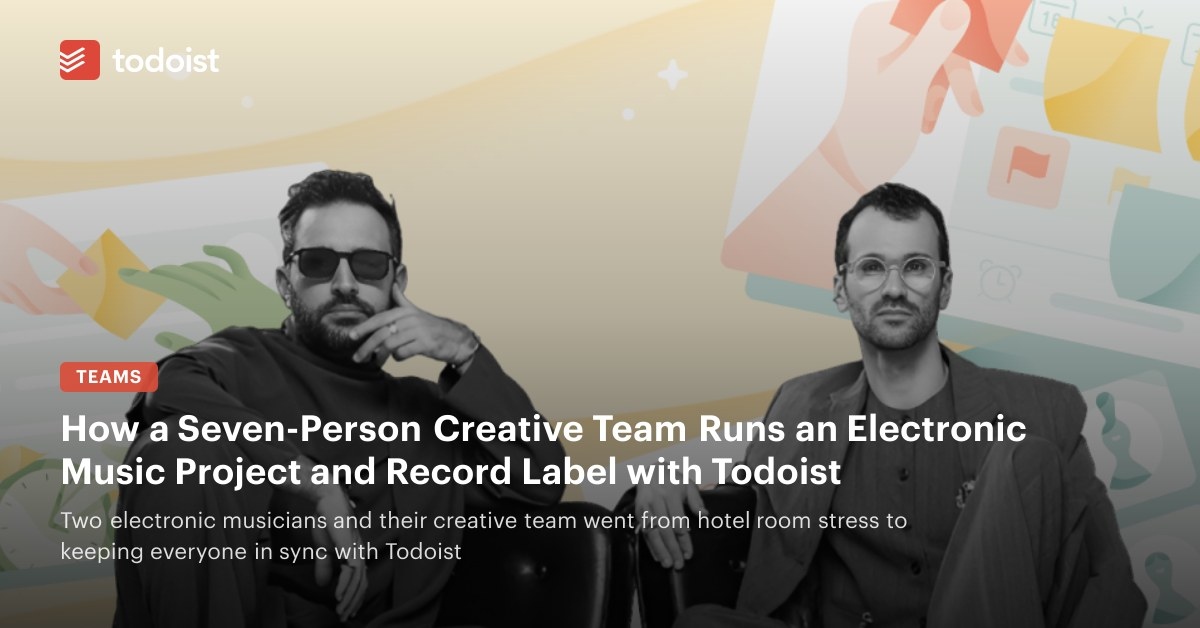
Luís Clara Gomes and Gui Tomé Ribeiro have performed together for nearly a decade as electronic duo MXGPU. Through their Lisbon-based label, Discotexas, they write and produce music, arrange live shows, communicate with artists, direct photo shoots, manage social media and PR campaigns, and release records. Their seven-person creative team includes specialists in design, content, photography, operations, and other areas.
They initially tried to coordinate that work in a spreadsheet.
A spreadsheet overwhelmed by creative work
The team's comfort with technology varies widely: some members are programmers, while others prefer paper on a wall. Luis Clara Gomes observed that making music in 2026 requires many different roles, and that producing good music alone is not enough.
A spreadsheet seemed like common ground, with WhatsApp group chats handling discussions. But even a show announcement could generate a dozen entries for artwork, ticket links, door times, posting schedules, and responsibilities. Adding a record release made the arrangement unmanageable.
Gui recalled that confusion grew quickly, and that everyone could not remain responsible for everything.
The turning point in Poland
While filming a TV show in Poland, the team gathered in a hotel room with their laptops to untangle the workload. Gui described having many tasks but no clear plan for completing them.
They discussed replacing the spreadsheet with a project management tool. Asana, Trello, and Notion felt too complex; the replacement needed to be approachable enough for everyone to adopt. Luis argued that a tool people cannot be motivated to use simply becomes another burden.
He suggested Todoist. Together, they created a team workspace that night, agreeing on project organization, what should count as a sub-task, and who would own each piece of work. Gui said the approach began making sense that day and looked clear enough to succeed.
How their workspace is organized
MXGPU now uses projects for communications and marketing, shows, studio and store work, releases, and other responsibilities. Separate tags for communications, production, and management meetings automatically bring relevant agenda items together.
For each release, the team duplicates a master template and plans backward from launch, assigning artwork specs, audio masters, lyrics, DJ promo, DSP pitches, visualizer assets, Discord posts, and a debrief.
Sub-task descriptions can contain direct links to the relevant Dropbox files. Gui explained that anyone handling artwork can open its task and find the single final file, avoiding confusion over versions.
One system for work and personal life
Luis also uses Todoist outside MXGPU. He wants one tool for intertwined personal and professional responsibilities, while retaining a boundary between them.
An iOS shortcut opens Ramble directly so he can record a creative idea or a reminder to call someone. It arrives in his Todoist Inbox for sorting later. He said capturing ideas somewhere reliable relieves his anxiety about forgetting them.
He also values describing tasks in writing or aloud rather than configuring them manually. For example, he uses the literal phrase "every two weeks" to schedule a recurring reminder to refresh his YouTube music playlist.
Replacing WhatsApp follow-ups
Creative Operations Manager João Cardielos explains the change to spreadsheet-and-chat users in terms of delegation: a task can belong to someone else, who receives an email notification on its due date. He said that capability was new to the team and made a significant difference.
Email notifications reach even teammates who do not open Todoist daily, reducing the need to chase updates. Conversations that once disappeared beneath twenty WhatsApp messages now remain in task comments.
Gui particularly values connecting an interaction with a specific person to the relevant task or sub-task—something much harder to manage in WhatsApp.
More coordinated output
Gui said people close to MXGPU ask about their process after noticing frequent music and content releases, cohesive show announcements, and consistent communications.
He attributed increased productivity to finally having a way to organize everyone's work through Todoist.
Three lessons from MXGPU's setup
1. Agree on the rules at the start
Make a clear transition to Todoist, even if it feels abrupt. Keeping the old system running alongside it can prevent meaningful change.
2. Keep files and links with their tasks
Place the Dropbox link, final asset, or brief in the task description. A known location keeps important material from disappearing into message threads.
3. Create templates for repeatable work
Templates can be duplicated in seconds, saving the team from designing the same process again each time.